The Third Man’s Inheritance
Viktor spent his Tuesday mornings calculating the depreciation of dental equipment for a mid-sized firm in the Third District. It was work that required the soul of a ledger and the imagination of a brick.
When the lawyer informed him that his great-uncle Ernst — a man Viktor remembered only as a beige silhouette who appeared at funerals to eat too many ham rolls — had left him a safety deposit box, he felt no thrill. Only the mild annoyance of an unscheduled appointment.
The vault was cold, polished steel and silence. Inside the drawer lay no gold, no bonds, only a single 16mm film reel in a rusted orange casing and a scrap of paper turned the color of a bruised apple.
“The edit was too kind,” the note read in sharp, slanted handwriting. “They cut the fall, but they couldn’t cut the gravity. The dividend remains. Look for the man who doesn’t check his watch.”
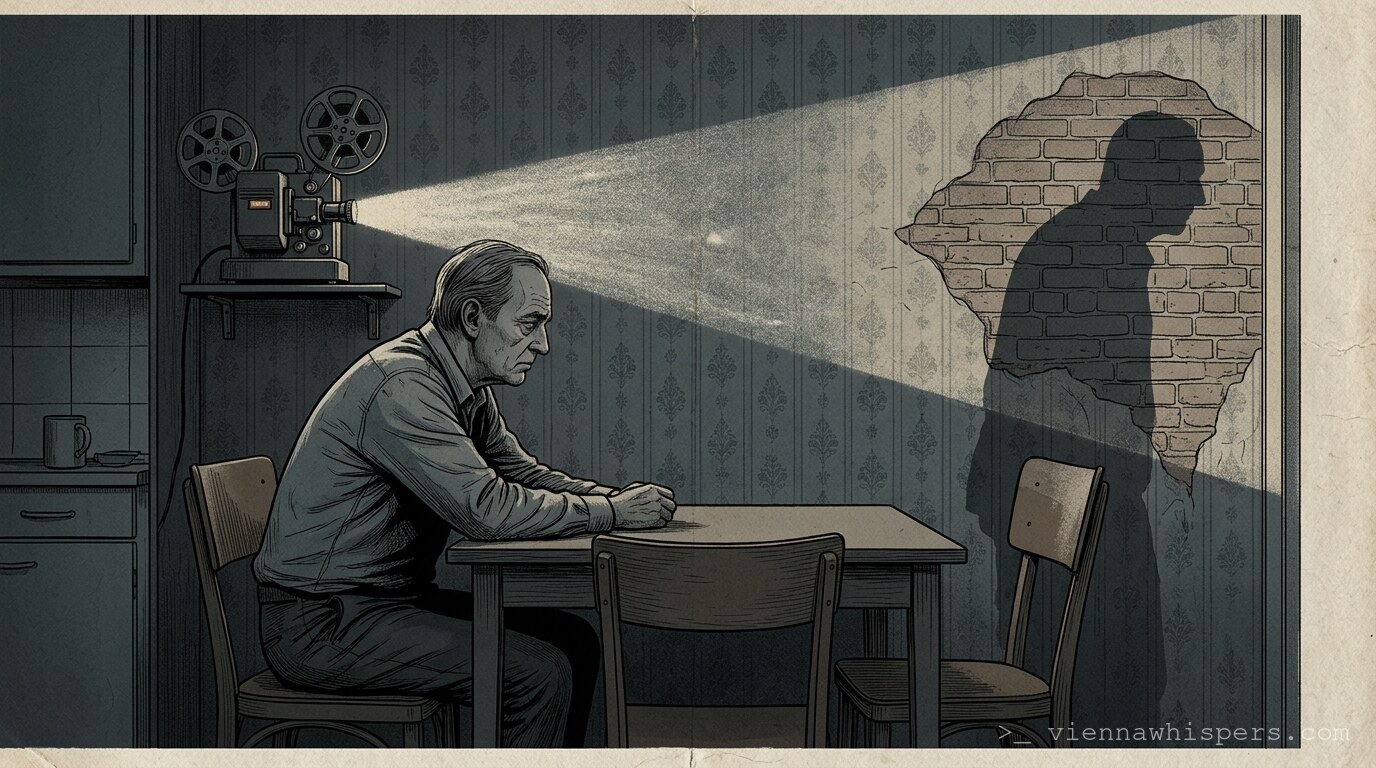
Viktor brought the items home. He owned a small projector bought years ago at a flea market. When he threaded the film, the smell of vinegar and decaying cellulose filled the room.
The footage flickered to life against his cream-colored wallpaper. It was not the famous sewer chase. It was a narrow alleyway, lit by a single harsh streetlamp. A man walked away from the camera in a heavy coat, collar turned up. When he stopped and turned his head, it wasn’t Orson Welles.
It was Viktor’s own face.
He watched himself press a small silver coin into a crack in the masonry. Then the figure looked directly into the lens with a weary, bureaucratic coldness.
The film ended.
For the next three days Viktor didn’t go to work. He walked the streets of the First District, eyes tracing shadows. He began to notice the dividends: a man on a park bench who never read his newspaper, a waiter who tapped the table three times when handed a tip — a rhythm that matched the clicking of the projector.
The city, he realized, was not a place where history ended. It was a place where it was processed, packaged, and quietly sold to the highest bidder.
On Thursday he returned to the alley from the film. It existed — a jagged slit behind a dumpster. He reached into the familiar fissure and pulled out a small metallic cylinder.
It contained a list. Names, dates, and account numbers linked to foundations that supposedly funded cultural projects. The math didn’t add up. The dividends were still flowing, refined into the transit of illicit information.
A shadow fell across the cobbles behind him.
“You look tired, Herr Viktor,” a thin, precise voice said. It lacked any malice. It was the voice of a clerk. “Inheritances are such a burden in this town.”
Viktor didn’t turn around. He understood now. He hadn’t inherited money or secrets.
He had inherited the account.
He walked home, the cylinder heavy in his pocket. In his kitchen he sat at the table and pulled out his calculator. He began punching in the numbers from the list.
Outside, the bells of St. Stephen’s began to toll. Viktor didn’t look up. He was busy calculating the next quarter’s growth.
The projector was still running in the corner, even though the film had long since snapped. The end of the reel flapped rhythmically against the metal spool — a soft, insistent sound, like a finger tapping on a door that was already open.
Support us
Vienna Whispers is free to read. If you enjoy the stories, we’d be grateful for your support.