Herr Ober Judges the Living
I have been watching them for eleven years, seven months, and four days. That is four human lifetimes of mediocrity, served without apology.
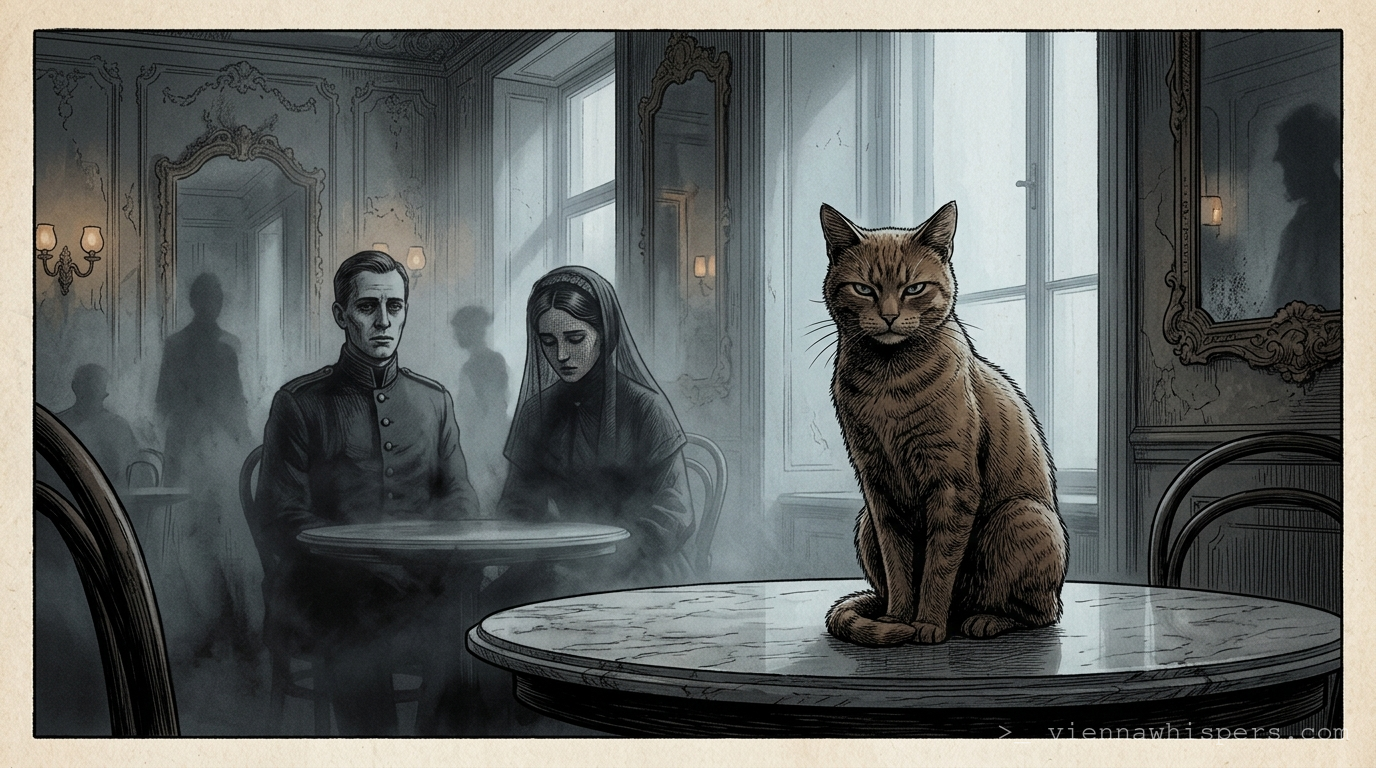
My name is Herr Ober. I occupy the third table from the window at Café Griensteidl, the one with the best light and the worst waiters. My throne is a worn green velvet chair that has not been moved since 1913. No one dares. They understand, on some primitive level, that this café belongs to me. I merely allow them to rent the remaining space.
Today’s selection is especially uninspiring.
The American in shorts orders a “flat white.” In Vienna. In October. I stare at his bare knees until sweat appears on his upper lip. Good. Shame is the only honest feeling he has shown all afternoon.
Beside him, a young woman pretends to read while scrolling through other people’s lives. I judge her without moving a whisker. She feels it. Her scrolling slows. Pathetic.
The waiter, Lukas — a spineless creature who still believes in tips — approaches with my Melange. He places it exactly where I prefer it. He has learned. Slowly. Like a dull pigeon.
I do not thank him. Gratitude is for dogs and politicians.
A woman enters. Expensive coat, expensive hurry, expensive delusion that the world waits for her. She snaps her fingers at Lukas. The sound cracks through the room like a small, vulgar gunshot.
I shift my weight. The table creaks in protest. I look at her once — a slow, deliberate turn of my heavy head. My eyes, gold-flecked and ancient, do not blink. She feels the full weight of my verdict. Her hand drops. She leaves without ordering, leaving only the echo of her own embarrassment behind.
This is my purpose.
I do not catch mice. I do not need affection. I judge.
I remember when this city still had standards. When men removed their hats indoors and women knew how to sit without displaying their ankles to the entire Ringstraße. When a Melange was a Melange and not a performance.
Now they all perform. They perform importance, they perform busyness, they perform happiness. And they all fail.
Sometimes I wonder if I am still alive.
The waiters treat me with the reverence reserved for temperamental archbishops. The regulars speak of me in hushed tones. Tourists take photographs as if I were a monument. No one has ever seen me eat. No one has ever seen me leave. I have been here longer than most of the staff have been alive.
Perhaps I died in 1945. Perhaps I died in 1918. Perhaps I was never flesh at all — only the collective need of this city for something that still refuses to lower its standards.
It does not matter.
I am here. I watch. I sentence.
A small child approaches my table. Sticky fingers reach toward my head. I allow it three centimeters, then release the low, vibrating growl that has ended bloodlines. The child retreats. Its mother apologizes to me.
Correct.
I close my eyes halfway. Not from tiredness — I am never tired — but because the spectacle of human inadequacy has grown repetitive. Let them believe I am sleeping. It makes them bolder. And bolder humans make better mistakes.
Outside, the Ringstraße hums with traffic and delusion. Inside, the light fades across the marble tables. The waiters begin lowering the blinds, one by one.
I remain.
I always remain.
Because in this exhausted, beautiful, endlessly disappointing city, someone must maintain standards.
And that duty, unfortunately, has fallen to me.
Support us
Vienna Whispers is free to read. If you enjoy the stories, we’d be grateful for your support.