The Eternal Guest
In 1679 the air in Vienna tasted of quicklime and rot. The bells had stopped ringing because the sextons were all dead. Augustin was thrown into a plague pit near Sankt Ulrich, where the bodies formed a humid, writhing architecture of fever — limbs twitching long after the souls had left, skin sliding against skin in the warm, sour dark.
He did not pray. He sat among the shifting corpses, nursing a flask of sour spirits scavenged from a dead merchant, and waited for the end. He found the idea of being dead remarkably boring.
“One more,” he whispered into the darkness.
The city answered. It did not cure him. It merely halted him.
He climbed out two days later, skin the color of curdled milk, pockets empty, soul quietly switched to the off position.
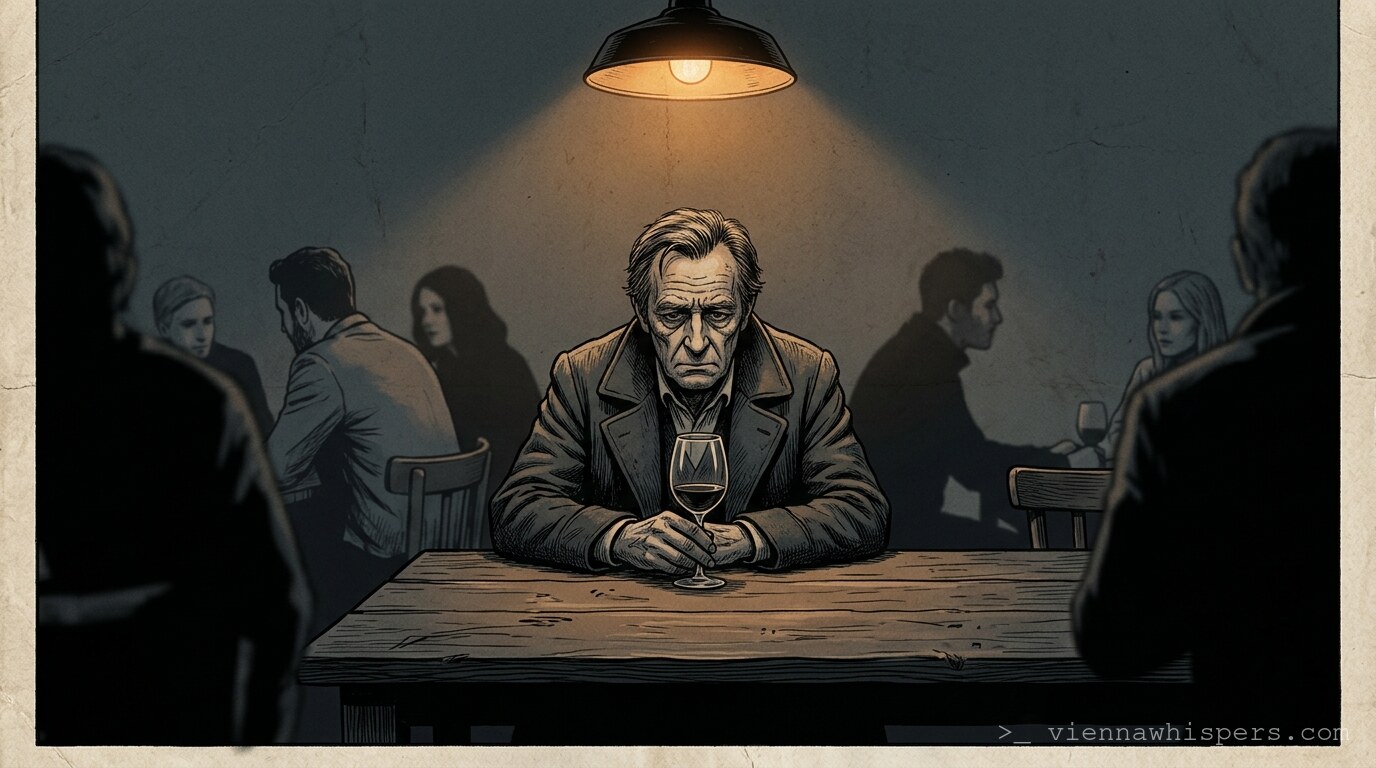
Present-day Vienna is a city that has learned to order espresso. Augustin sits in the corner of a small Beisl in Leopoldstadt, where the wood paneling is held together by varnish and habit. His wool coat is three hundred years out of fashion but passes for vintage. He is on his third Viertel of Grüner Veltliner.
His face is a map of a city that no longer exists.
The waiter, Marek, approaches with the mechanical indifference of someone restocking inventory. Augustin is not a regular to him. He is part of the furniture — an old, slightly musty piece that has simply always been there.
“Another, Herr Augustin?”
“The rules of the house, Marek. Always the last guest.”
Marek grunts and pours. He treats Augustin like a stubborn stain on the tablecloth — annoying, but not worth the effort of removal.
Augustin watches a young couple at the next table. They argue in sharp, brittle voices, faces lit by cold phone light. They treat the night like something they need to finish and escape. He remembers plague nights when people clung to each other with wet, desperate hunger. Everything was louder then. Everything was shorter.
He has outlived the concept of a decent evening.
When Marek brings the bill, Augustin reaches into his left pocket. His fingers find the small handful of copper coins from 1680 that he still carries. They jingle softly — a tiny, pathetic sound no one else notices. A nervous habit older than most countries. He puts them back and pays with a modern bill instead.
“They don’t know how to sit anymore,” he murmurs to his empty glass. “They drink to arrive somewhere. Not to be here.”
Marek begins stacking chairs. The scrape of wood against tile is the same sound it has made for centuries.
“Time, Augustin.”
Augustin stands. He is surprisingly steady. He pauses at the door for a moment, looking back into the empty room. It is a small ritual of respect. The space is already waiting for the next layer of smoke, the next generation of heartbreak.
Outside, the night air is cool and damp. Streetlamps flicker. A church bell strikes somewhere — too thin, too precise.
Augustin pulls his coat tighter and walks down Grosse Sperlgasse. His footsteps click in a rhythm that belongs to another century. In his pocket, the old copper coins jingle once more, quietly, as if reminding him that he is still here.
He is the eternal guest.
The one who stays until the last glass is empty, the last light turned off, the last door closed.
And the city — that great, stone-hearted beast — lets him.
Support us
Vienna Whispers is free to read. If you enjoy the stories, we’d be grateful for your support.