The Fisherwoman and the Bombed City
The Donaukanal at three in the morning does not forgive, but it does listen. It is a bruised ribbon of water, smelling of wet concrete, industrial runoff, and the slow, rhythmic decay of imperial ambitions. Most people avoid the banks after midnight. I do not.
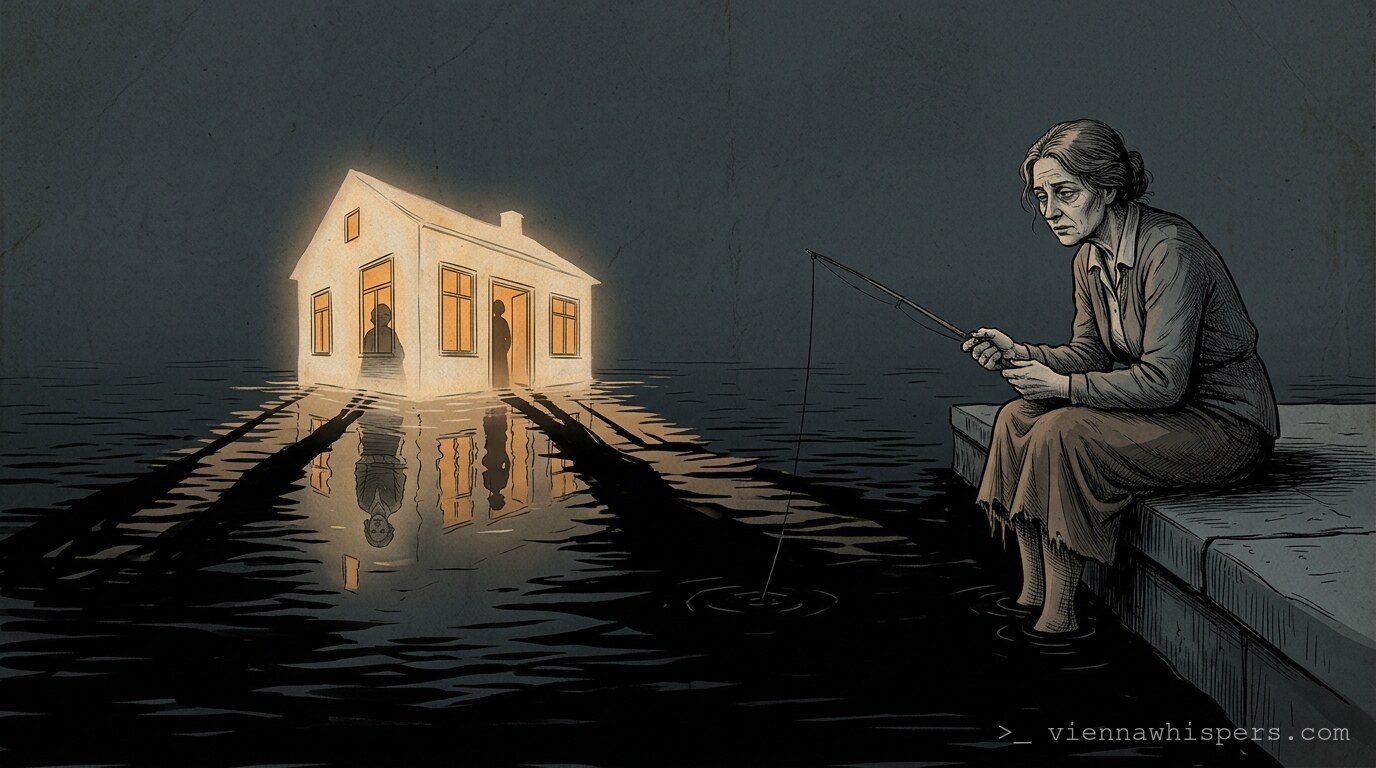
My line is not made of nylon. It is spun from the fine, grey threads of fog that cling to the U-Bahn vents when the wind catches them just right. The hook is forged from a bent 1945 ration card — a piece of metal that remembers hunger better than I do.
I sit on the concrete embankment near the Schottenring, legs dangling over the dark, oily glass of the channel. My knees ache with the damp. I still wear thin silk stockings. A small, persistent vanity.
The surface of the water is a mirror that has been shattered and hastily glued back together. I wait for the refraction. It comes when the moonlight hits the ripples at the precise angle of a regret.
Last night I pulled up the skeleton of the old Ringtheater. Another night, a fragment of Leopoldstadt with bricks still warm from phantom footsteps. They are not ghosts in the usual sense. They are displaced buildings. The architectural dead that refuse to stay buried.
Tonight the tug was heavier.
I hauled it up slowly. The image clarified. It was my childhood home in the Ninth District — the modest Zinshaus with peeling ochre stucco and the crooked drainpipe. The one that vanished in March 1945. The windows were lit with gaslight and kerosene. A woman moved behind the curtain on the second floor, carrying a tray of coffee. Her shoulders had the same quiet slope as my mother’s.
I leaned closer. In the reflection, my own face appeared in one of the phantom windows — older, thinner, already marked by decades of watching this city refuse to die.
The cold rose from the water like a hand pressing against my chest.
I cut the line.
The house shattered into a thousand glittering black shards. The warm light in the windows died instantly. The Donaukanal became nothing but oily water again, indifferent and modern.
I stood up. My joints cracked like dry twigs. I left the ration card hook lying on the stone. It felt heavier than it should have.
I walked away without looking back.
Support us
Vienna Whispers is free to read. If you enjoy the stories, we’d be grateful for your support.