The Keeper of Unlisted Graves
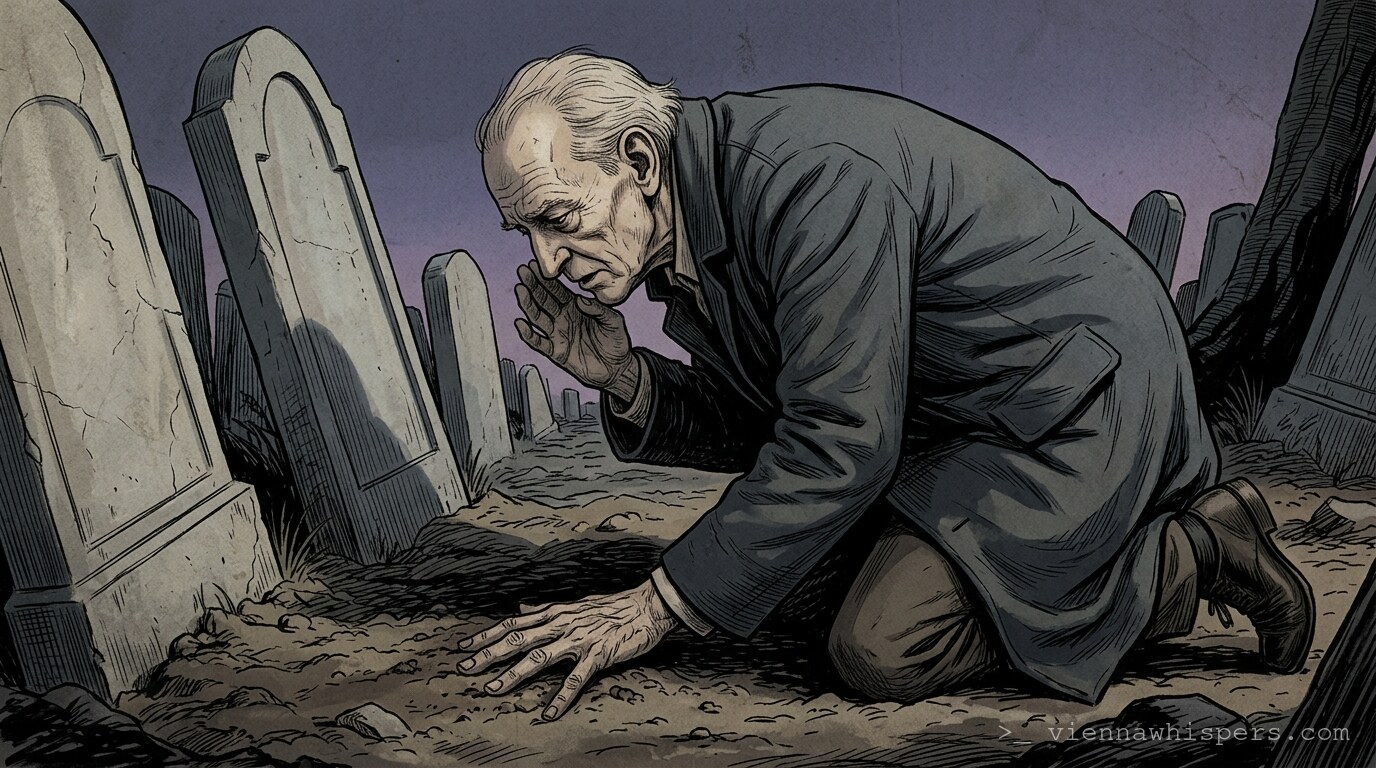
Herr Specht knelt in the dirt, his knees crackling like old parchment. In his coat pocket he carried a small, leather-bound notebook that had no official purpose. The Magistrat had erased these names from the register years ago, declaring the plots “reclaimed for perpetual silence.” But Herr Specht had never been good at obeying silence.
St. Marx was always quiet, but at this hour — the bruised violet moment between day and true night — it felt expectant. The air smelled of wet limestone, crushed boxwood, and the faint metallic promise of rain that never quite arrived.
He reached out and touched the marble of a stone belonging to a woman named Hofratswitwe Elfriede von Bernstein, dead since 1873. The stone was warm. Not from the sun, but from something deeper, as if she were still shivering down there.
“Don’t be dramatic, Frau Elfi,” he muttered, brushing moss from the carved date with a wire brush. “The clerk didn’t forget you out of cruelty. He forgot you because he’s a bureaucratic idiot who finds history inconvenient. There’s a difference.”
He worked with slow, methodical care, the same way he had for thirty years. At seventy-eight, his hands were dry and spotted, his wool coat permanently scented with damp earth and old coffee. He was a man of precise, stubborn habits.
He moved to the next plot — a shallow depression in the grass that, according to every official map, did not exist. This was where a man who had once worked for the secret police in the last days of the Monarchy was supposed to lie. Herr Specht had never liked him, but he respected the right to remain buried.
As he knelt, the ground beneath his right hand gave a subtle, almost polite shiver.
“Still waiting for your pension report?” Specht asked the earth, his voice low and gravelly. “There is no report. The office burned in ’45. You’re free. Sleep.”
The ground stilled.
It was a strange kind of guardianship. Specht knew that if he stopped coming, the city would eventually pave these places over or plant tidy, soulless hedges. He was the last bridge between the living bureaucracy and the unlisted dead.
Sometimes he wondered if he was becoming part of the architecture himself. His joints stiffened like old granite. He often caught himself standing motionless for long minutes, listening to the way the shadows moved across the stones.
He poured a capful of bitter coffee onto a nameless plot.
“For the dry throat,” he murmured.
The silence here was heavy, filled with the accumulated weight of small, forgotten lives. Specht felt them against his palms when he touched the stones — lonely things that needed a witness.
He looked at the empty space beside him where a headstone had been removed decades ago. For a moment he thought he saw the grass shift, as if someone were leaning against the air, watching him.
“You look thin,” he told the nothing. “Pull your shroud up. It’s going to freeze tonight.”
He stood up slowly, knees popping. He brushed the dirt from his trousers and gathered his tools. A crow watched him from the iron fence, black eyes indifferent.
As he walked toward the gate, his steps were measured against the distant hum of the city. The lights of Vienna were beginning to flicker on, cold and electric, indifferent to the slow decay of the stones behind him.
He paused at the iron gate and looked back once. The twilight had deepened into rich indigo. For a second he thought he saw the sunken grave he had just tended rise slightly, the earth settling as if someone had sighed and shifted in their sleep.
He didn’t turn back. He knew better than to stare too long when the dead decided to move.
He stepped out onto the cobblestones. The gate clicked shut behind him with the finality of a period at the end of a very long sentence.
Herr Specht pulled his collar up against the wind and walked home, his shadow stretching long and thin until it dissolved into the darkness of the alley.
The city kept breathing above ground. Down here, the unlisted kept their own quiet count.
Support us
Vienna Whispers is free to read. If you enjoy the stories, we’d be grateful for your support.