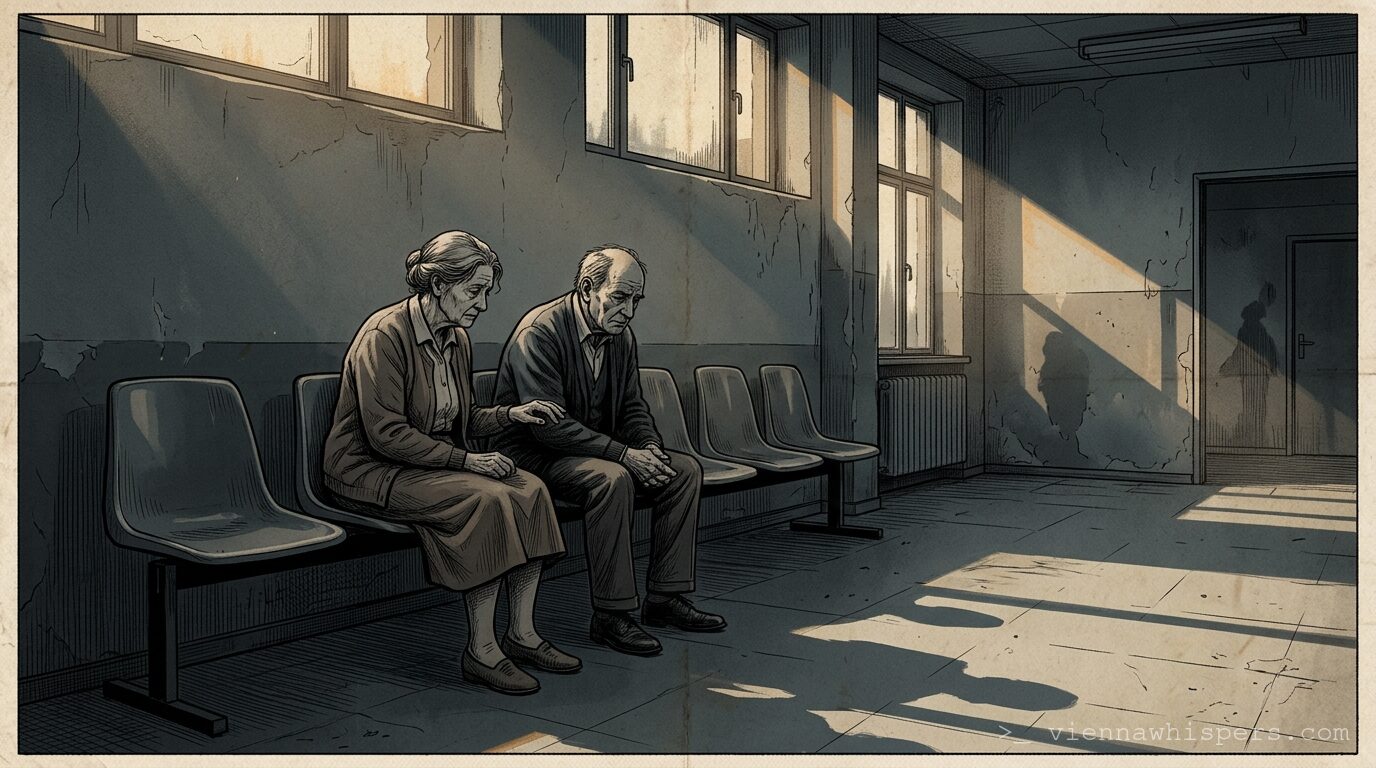
Golden Hour in Queue 17
The waiting room of the Magistrat on a late October afternoon was not merely ugly; it was a perfect machine for the slow dissolution of human dignity. At 5:14 PM the setting sun forced its way through the high, grime-streaked windows and spilled a thick, golden light across the rows of molded plastic chairs. The light was not beautiful. It was viscous, heavy with floating dust and the particulate remains of decades of bureaucratic breathing. It made everything look expensive and already dead.
Rosa Berger sat on chair number 142. She was fifty-nine. Her navy wool coat, worn to her husband’s funeral six years earlier, still carried the faint smell of mothballs and the lemon drops she kept in the pocket to fight the metallic taste of waiting. The plastic chair pinched the backs of her thighs through her stockings. She had been filing the same hangnail for twenty-three minutes with a small emery board, a mechanical motion that required no thought.
Two seats to her left sat Karl Heidinger, sixty-two, recently retired from the Ministry of Finance. He looked as if he had been folded into his grey suit at birth and never quite unfolded. His gold-plated watch, a retirement gift from colleagues who no longer remembered his name, was losing three minutes and forty-seven seconds per day. He checked it constantly, as though the small mechanical betrayal might eventually matter.
The radiator beneath the window clanked at irregular intervals — a sound like old bones trying to settle into a position they would never quite achieve. The air was warm and damp, heavy with the smell of wet wool, floor polish, and the sour-sweet residue of thousands of anxious bodies that had passed through this room before them.
Around them the other applicants sat like inventory. Some stared at the digital display on the wall. Others stared at nothing. The display read “Now Serving: 139”. The numbers changed with the lazy indifference of a god who had long stopped caring about the prayers of its worshippers.
The golden light continued to pour in, coating the beige walls, the plastic chairs, the tired faces. It turned the scene into a painting that had been left too long in a cellar — colors still vivid, but everything already rotting underneath.
Rosa’s emery board made a soft, repetitive scratching sound. Karl’s fingers drummed once against his thigh, then stopped. Neither of them looked at the other. They had both learned, over decades, that in rooms like this eye contact was a luxury one could not afford.
Karl’s hand moved slowly across the cold plastic armrest until it hovered near Rosa’s. It trembled slightly.
“I used to process death certificates,” he said quietly, almost to himself. “For forty years. I was the one who ticked the box that said the person in question had stopped using municipal services. Name, date of birth, date of death. Clean. Administrative. No mess.”
Rosa stopped filing her nail. She looked at his hand. Yellowed fingernails. Ink stains that no soap could remove.
“My husband died on a Tuesday,” she said. “They needed three different forms to confirm he was really gone.”
Karl’s fingers finally touched hers. The contact was clammy, uncertain, strangely formal. Two middle-aged people holding hands in a place where touch had been optimized out of existence.
“I have a bottle of Grüner Veltliner at home,” Rosa said. Her voice was flat, almost bureaucratic. “It’s not cold. But it’s there.”
Karl’s grip tightened. His eyes stayed fixed on the digital display.
Now Serving: 140.
“If they call quickly,” he whispered, “I’ll be gone in ten minutes. If the clerk takes a smoke break… maybe twenty.”
Now Serving: 141.
Rosa stood up. The emery board fell from her lap and skittered across the linoleum with a tiny, final scratching sound. She did not pick it up.
She walked toward the exit. Her footsteps echoed strangely in the golden light. She pushed the door. It opened without resistance.
She stepped outside. The blue hour had already begun to settle over the cobblestones. The air was cold and sharp.
She waited three seconds. She counted her own heartbeats.
One.
Two.
Three.
Behind her, inside the Magistrat, the digital display chimed.
Now Serving: 142.
Karl Heidinger remained seated, his hand still outstretched over the empty plastic chair, ticket number 143 clutched between his fingers like a sacred, useless relic.
The golden light continued to pour through the windows, thick and indifferent, coating everything it touched.
Support us
Vienna Whispers is free to read. If you enjoy the stories, we’d be grateful for your support.