The Ant-Egg Collector
The formic acid had long since turned Klara´s fingerprints into a smooth, unreadable mosaic. Forty-five years old, and her hands already looked like they belonged to someone much older.
She knelt in a clearing near the Lainzer Tiergarten, her wooden spoon moving with metronomic precision. Every five seconds a flick of the wrist. A mound of earth erupted in panic — black-headed Formica rufa soldiers swarming — and then the prize: the pale, translucent pupae. They looked like oversized grains of rice, twitching with embryonic, frantic energy as she scooped them onto the taut linen cloth spread across the moss.
She did not hate the ants. Hate implied a relationship. She simply extracted them.
Her knees clicked as she shifted her weight. The damp of the forest floor had long ago seeped into her joints. Her lungs carried a permanent dry fire from decades of breathing formic acid fumes. She no longer noticed the sharp smell — it had tanned her sinuses years ago.
She checked her old pocket watch. She was late for the delivery to Herr Steiner’s apothecary in the 1st district. The man had been her only steady customer for seventeen years, yet each visit felt more like a farewell than a transaction.
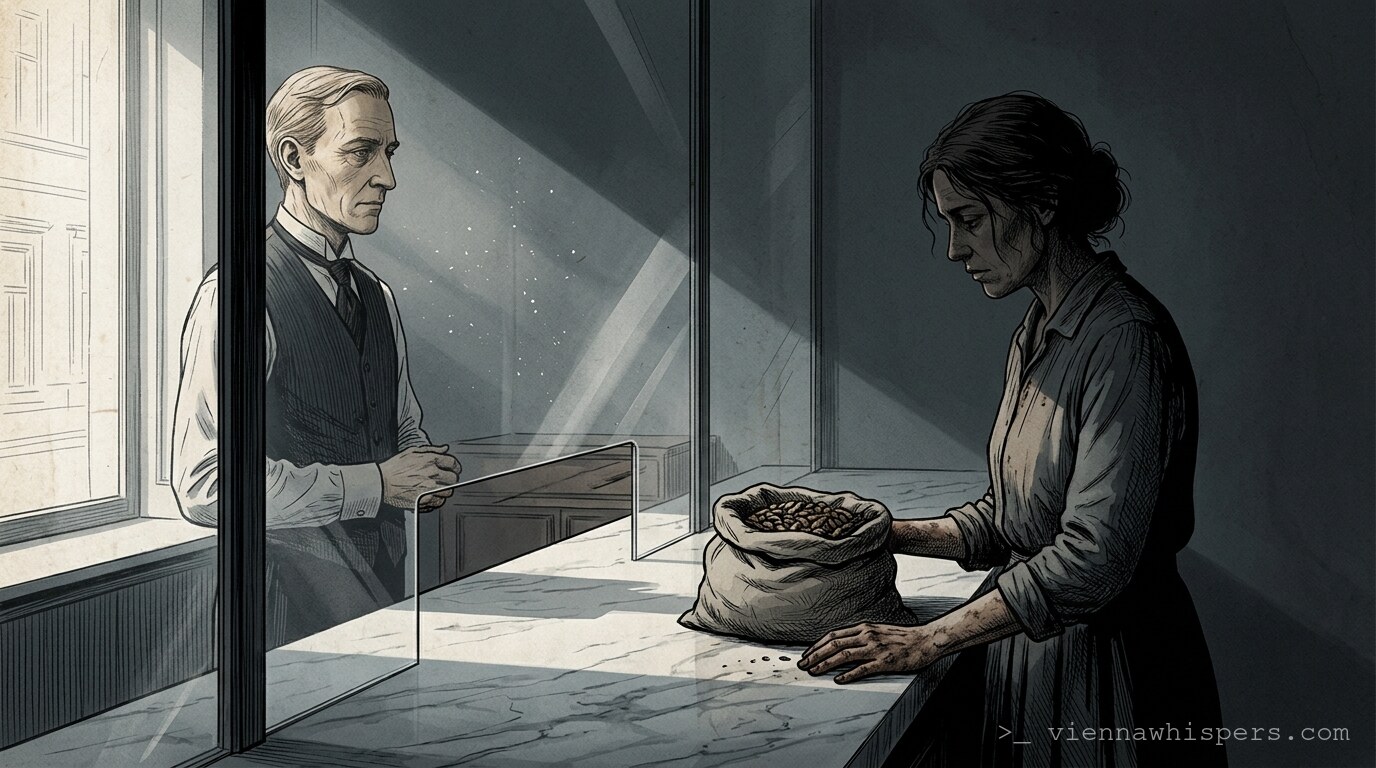
The walk back into the city was a descent from one kind of decay into another. From the rich loam and pine needles to the polished marble and diesel fumes of the inner districts. When she entered the pharmacy, Steiner was already waiting behind the counter, his face tight.
“The laboratory in Basel has perfected the synthetic chain,” he said without preamble. “It’s consistent, Klara. Regulated. No seasonal fluctuation.”
Klara set the heavy linen bag on the counter with a soft thump. The pupae inside had gone quiet in the warmth of the city.
Steiner didn’t open the bag. He simply slid an envelope toward her — the same amount as always, but it felt smaller.
“They want predictability,” he added, almost apologetically. “The customers… they trust the label more than the forest.”
Klara looked down at her hands. The nails were jagged, the skin stained a permanent bruised yellow from soil and acid. For seventeen years she had been the bridge between the rotting floor of the Vienna Woods and the sterile jars on these shelves.
She took the envelope without a word.
Outside on the Graben the sun was high and unforgiving. Tourists swarmed around the plague column, cameras clicking. Klara stood among them — a woman smelling of forest acid and wet leaves in a square that smelled of expensive perfume and exhaust.
She reached into her coat pocket and felt the wooden spoon, worn smooth by decades of use. It fit perfectly into the hollow of her palm.
She could throw it away. She could go home, scrub the dirt from her skin, and become as clean and empty as the new synthetic vials on Steiner’s shelves.
Instead, she kept the spoon.
She took the tram to the end of the line, where the city finally surrendered to the trees, and walked back into the dark, tangled silence of the forest. Her hands still twitched with the ghost-memory of the harvest.
The ants would rebuild their cathedrals by tomorrow.
She wondered how long it would take before no one remembered that someone like her had ever existed.
Support us
Vienna Whispers is free to read. If you enjoy the stories, we’d be grateful for your support.