The Sandman
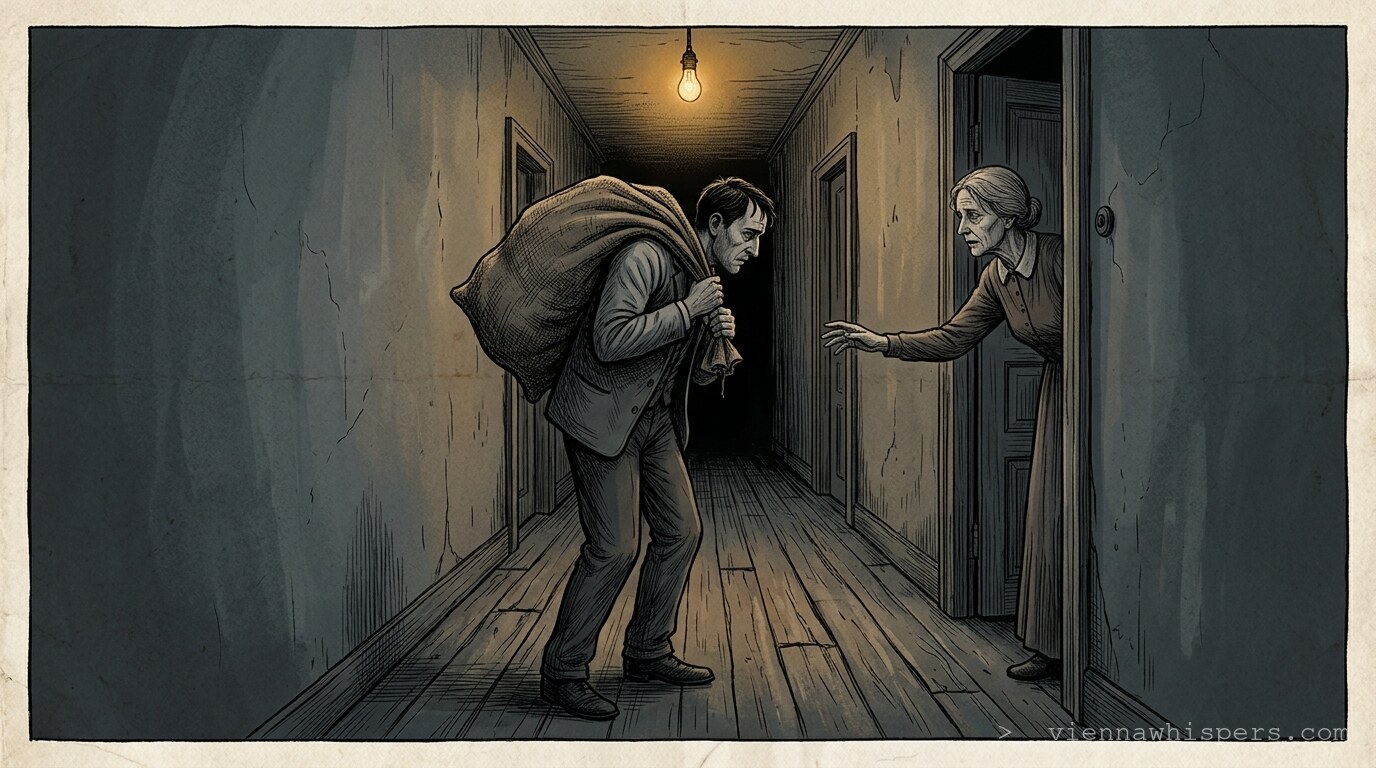
The burlap sack pressed into Karl’s spine like an old accusation. Fifty-five years old, and his gait had become the splayed, testing walk of a man who still believed the ground should push back.
Inside the sack was the Danube: sharp, grey, angular grains harvested from the banks near Greifenstein. Not soft playground sand, but mineral grit that chewed into wood, bound grease, and left an honest, matte crust. It was the city’s old immune system against its own filth.
He stopped outside Café Moderne. Through the glass he saw floors sealed with white epoxy so perfect they looked like the inside of a coffin. A boy with plastic hair was wiping a table with something that smelled of ozone and contempt.
Karl pushed the door. The digital chime was thin and ridiculous.
“I have the sand,” he said, holding up a small sample pouch. “Fresh. It binds the grease. Gives the room a base note.”
The boy didn’t look up. “We have a maintenance contract. Polyurethane-sealed. The Roomba doesn’t like grit.”
Karl looked at the floor. It was a non-breathable skin. Smooth, sterile, incapable of holding memory or dirt. A surface designed for people who wanted to glide through life without leaving traces.
“It’s not just sand,” Karl muttered. “It’s friction.”
The boy gestured toward the door. “Good luck with that.”
Karl stepped back into the Blue Hour. The indigo light turned the old façades into bruised flesh — swollen, tired, still capable of showing marks. The new buildings, all glass and polished concrete, looked like corpses that had never lived long enough to bruise.
He continued his round. His last stop was Frau Steiner in her drafty Altbau. She opened the door, eyes sharp despite her ninety years.
“The grease spots are laughing at me again, Karl.”
He knelt in her kitchen. The oak boards were scarred, honest, alive. He cast the sharp Danube sand across the floor.
Chrrr-tsch. Chrrr-tsch.
The sound was the heartbeat of a city that once allowed itself to get dirty.
Later, at the riverbank, Karl sat on the cold stone. The sack was nearly empty. He took a handful of the grit and let it run through his fingers into the black water.
The city behind him was becoming smooth. Sealed. Frictionless. A place where nothing stuck and no one left a mark.
He looked at his own hands — thickened, grey, permanently etched with the Danube. He was becoming the same material he sold. A residue. A trace element the new, clean city could not account for.
A young couple walked past on the paved promenade, eyes glued to their phones, movements perfectly synchronized, gliding. They didn’t see him. He was already background noise.
Karl let the last grains fall.
The Danube took them without comment.
He remained sitting there — a Sandler in every sense of the word — slowly turning into the very grit the city no longer wanted.
Support us
Vienna Whispers is free to read. If you enjoy the stories, we’d be grateful for your support.