The Frequency in the Tower
In 1784, in the newly built Narrenturm, Johann struck a tuning fork against the damp masonry and discovered that the building did not merely echo sound — it remembered it.
The tone did not fade. It slid along the circular walls like a secret looking for a listener, until it found a precise flaw in the mortar. At that frequency the bricks began to hum. Not with vibration one could feel in the hands, but with a pressure behind the eyes, a suggestion that the stone was not inert but merely holding its breath. Johann wrote the observation in his log with a shaking hand. Two weeks later he died of a fever, complaining until the end about the ringing in his marrow.
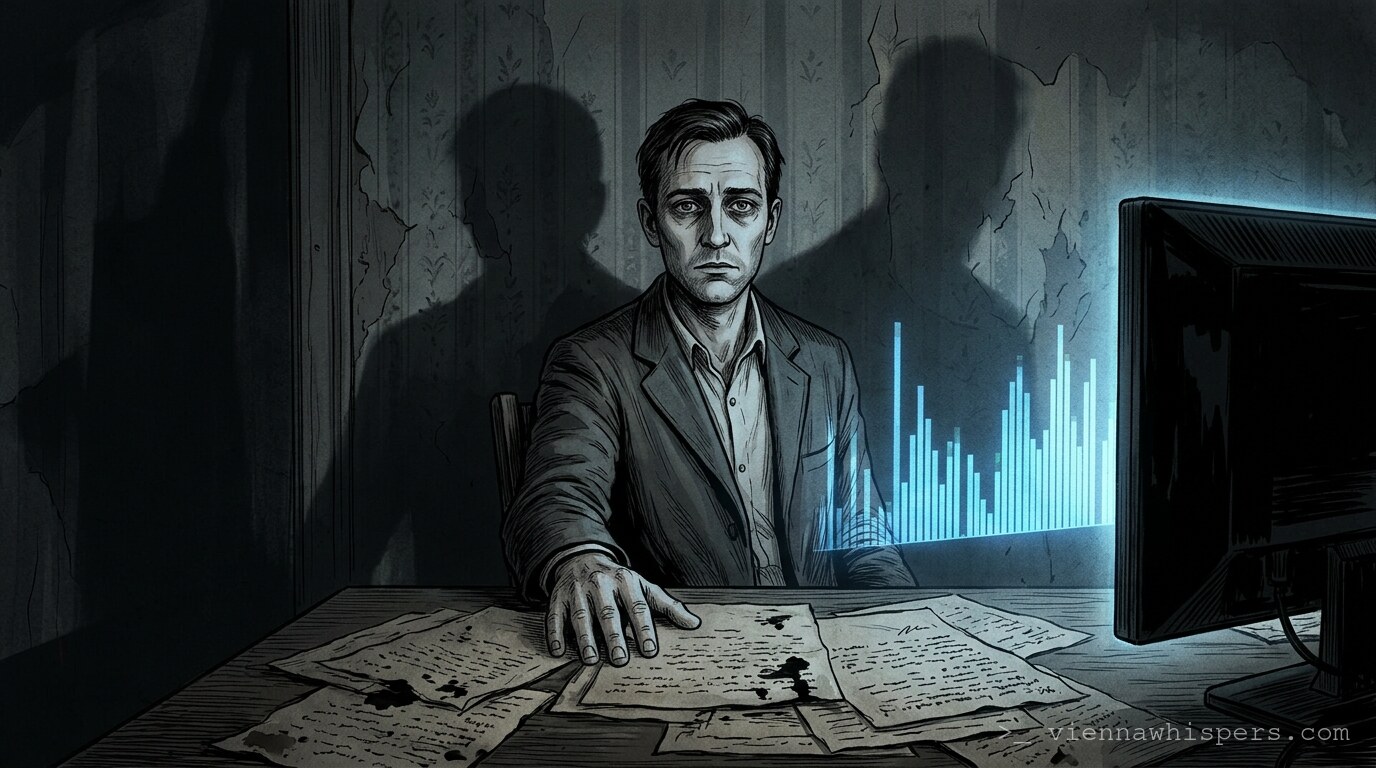
Two hundred and forty years later, Elias sat in his small apartment in Neubau with a digital spectrum analyzer and a cup of expensive tea gone cold.
He had been hunting the “Viennese hum” for months — that low-frequency drone most people blamed on the U-Bahn or aging pipes. But this was different. Buried beneath a Sunday morning recording from the Ninth District lay a clean sine wave at exactly 44.1 Hertz. The same frequency Johann had captured in the Narrenturm.
Elias leaned closer to the screen. The wave was not steady. It pulsed with a slow, deliberate rhythm, almost like a heartbeat that had learned patience over centuries.
He remembered the frantic notes he had found in an old attic — papers that smelled of damp cellar and dried ink. The bricks are not stone, the imperial clerk had written. They are tuning forks. They are waiting for the hand that knows how to play them.
Elias pressed his ear against the cold wall of his apartment. The nineteenth-century plaster was thick, yet he felt it — a faint, rhythmic shivering deep inside the masonry. It moved. Slowly. Geologically. From the Ringstraße toward the old hospital complex, crawling through the limestone foundations of the city like something searching for a worthy vessel.
His neighbor began vacuuming again. The mechanical whine bled into the recording. Elias froze. The vacuum sound was not in the room. It was already in the file.
He did not pull his ear from the wall. The stone was warm now, almost skin-warm. The frequency was no longer outside. It had found its way inside — settling into his bones, into the marrow Johann had once complained about.
Elias closed his eyes. The city was not built of stone and mortar. It was a vast, patient instrument, and someone — or something — had finally begun to play the note trapped inside its walls for over two centuries.
He wondered, with a strange, quiet calm, whether he had locked the front door.
In the end, it hardly mattered.
Outside, the winter light over Vienna deepened into the color of a bruised plum. In the Narrenturm the old bricks settled once more into silence, holding their breath, waiting for the echo to complete its long, deliberate journey home.
Support us
Vienna Whispers is free to read. If you enjoy the stories, we’d be grateful for your support.