The Hoof Man
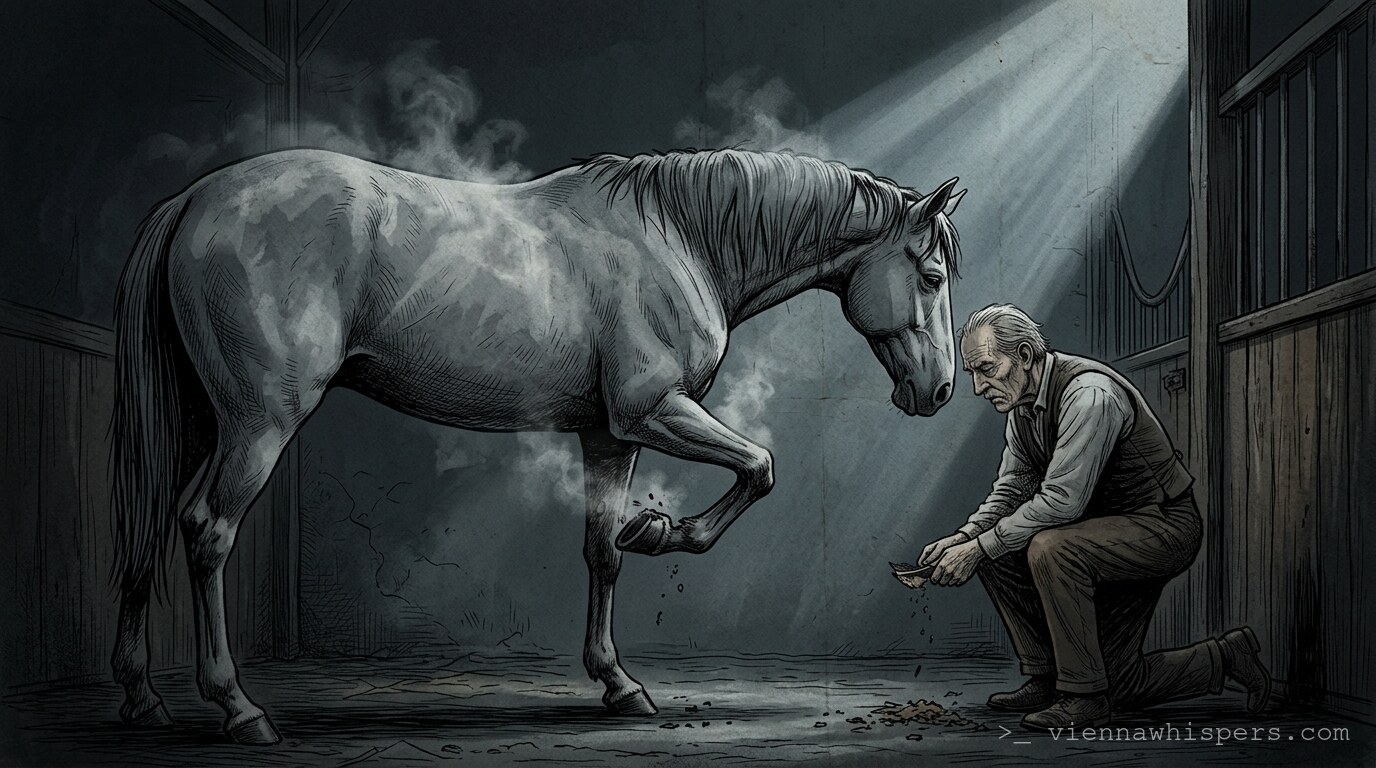
The metal of the hoof-pick is cold against Poldi’s palm, but the horse is still hot from the day’s labor. Steam rises from Kaiser’s gray flanks in slow, lazy curls, catching the last blue light that slips through the high stable windows. It is the hour when the tourists have finally gone home and the city exhales.
Poldi works in silence. Thirty years of this ritual have worn grooves into his movements. He lifts the heavy hind leg, braces it against his thigh, and scrapes the compacted filth from the frog — a grey, stubborn plug of asphalt, cigarette ash, and the sticky residue of a thousand overpriced carriage rides. The city leaves its mark on everything it touches.
“Steady,” he mutters. Not to calm the horse, but to steady himself. His back aches with the familiar, honest pain of real work.
Kaiser sighs, a long, shuddering breath that smells of warm hay, damp stone, and deep, animal exhaustion. The gelding turns his head slightly, fixing Poldi with one large, dark eye. There is no sentimentality in that gaze. Only an ancient, patient contempt — for the polyester jackets, the selfie sticks, the endless circles around the same pretty streets.
Poldi understands. These horses remember a different Vienna. One of dirt and slower rhythms. Of hooves on cobblestones that actually meant something. Not this hard, polished stage for tourists who see only the romance and never the weight.
He sets the hoof down gently and reaches for the currycomb. The heavy clack of iron on concrete echoes through the quiet barn. Outside, delivery vans rumble past. Inside, only the soft shifting of tired bodies and the occasional stamp of a hoof. Poldi brushes the gray coat in long, methodical strokes, watching the dapples emerge under the weak lantern light.
“They don’t see you,” he says quietly, his voice rough as old leather. “They think you’re decoration. Like the statues. Like the fountains.”
The horse huffs, a sharp, cynical sound.
Poldi smiles without warmth. He is sixty-eight, his hands permanently darkened by dirt and liniment, his shoulders permanently rounded from carrying saddles and responsibility. He has outlasted most of the coachmen. He has outlasted most illusions.
When he finishes, he steps back and looks at the line of stalls. Eight horses. Eight living relics forced to perform for a city that has forgotten how to move at their pace. He leaves the lantern burning — a small, stubborn point of yellow in the blue gloom — and walks toward the heavy wooden door.
For a moment he pauses, hand on the iron bolt. He can still feel the warmth of Kaiser’s flank against his shoulder, that brief, wordless acknowledgment between two creatures who understand what it means to be useful until you are used up.
Outside, the cold night air bites at his face. The alley smells of wet stone and distant kebab grease. Poldi pulls his collar up and walks slowly toward the tram stop, his boots ringing against the pavement with the same heavy, metallic rhythm as the horseshoes he has spent his life tending.
Behind him, in the stable, the horses stand in the soft yellow light, waiting for tomorrow’s harnesses and tomorrow’s indifferent passengers.
The city keeps turning. Faster now. Harder. But in the blue hour between day and night, in the quiet stalls behind the tourist routes, something older still remembers how things used to be.
And Poldi is still listening.
Support us
Vienna Whispers is free to read. If you enjoy the stories, we’d be grateful for your support.