The Girl Who Named the River
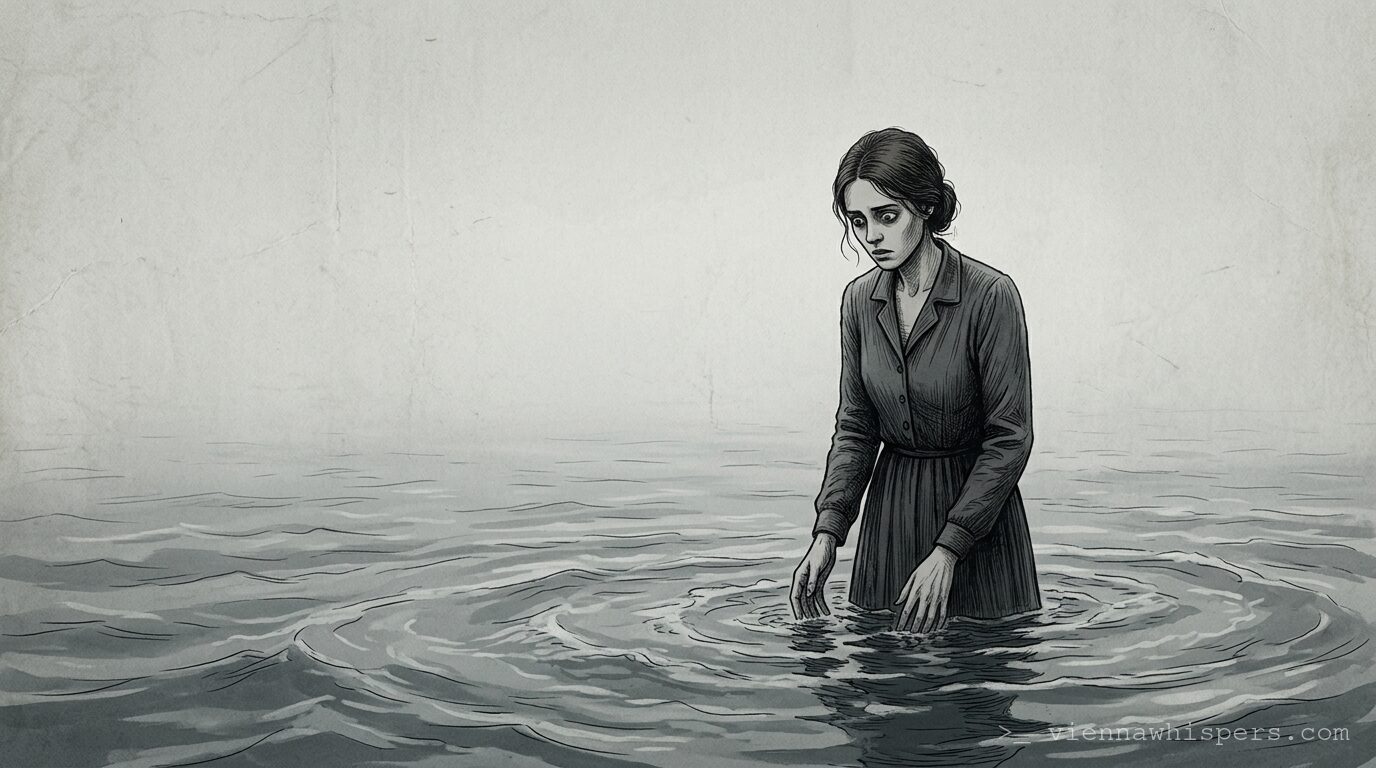
Lona stood knee-deep in the grey, sliding throat of the Danube. The water pressed cold and heavy against her shins, a slow, living pressure that made the bones in her ankles ache. Fine silt swirled around her calves like smoke underwater. Every small movement pulled more of it up, clouding the view of her own feet until they looked pale and already half-dissolved.
She was twenty-nine. The skin around both thumbnails was raw, picked open in small crescent-shaped wounds that stung sharply in the cold. She kept picking anyway. The habit had become almost automatic these last weeks.
She had rehearsed the name for three mornings. Now she spoke it aloud. The vowels sat low and heavy in her chest. The consonants left her lips like small stones dropped into the current. She felt the vibration travel down her sternum and disappear somewhere below her ribs.
The river took the sound without reaction.
A silver fish slid past her left calf, brushing the skin with indifferent precision. She did not flinch this time. Instead she pushed her hands deeper, past the wrists, elbows, until the cold became a burning ring around her arms. Her fingers dug into the soft riverbed. The mud was warmer than the water — almost body temperature — and yielded too easily, closing around her knuckles like wet flesh.
She spoke the name again. Louder. The fog swallowed the sound before it could travel ten paces. Under the surface her hands looked foreign, distorted, the fingers pale and swollen. Small threads of blood from her torn cuticles drifted away in thin red ribbons and dissolved instantly.
She stayed there. The cold moved upward in slow stages: first the feet, then the calves, then the knees. Her legs began to tremble, but she remained standing, arms submerged, eyes fixed on the place where the name had disappeared.
The fog grew thicker. The opposite bank vanished. There was only the sound of water moving against her body and the low, continuous breathing of the river. It did not hurry. It did not care.
She tried the name one final time. The syllables felt strange now, foreign in her own mouth, as if they had never truly belonged to her. They left her lips and were gone — swallowed cleanly, without echo, without residue.
Lona remained motionless for a long time. The cold had reached her hips. Her teeth began to chatter in small, irregular bursts. She watched the surface of the water where her hands had disturbed it slowly smooth itself out again, the silt settling, the small waves flattening, the place where she stood becoming indistinguishable from the rest of the river.
The surface sealed.
Nothing remained to show she had ever been there.
Support us
Vienna Whispers is free to read. If you enjoy the stories, we’d be grateful for your support.